
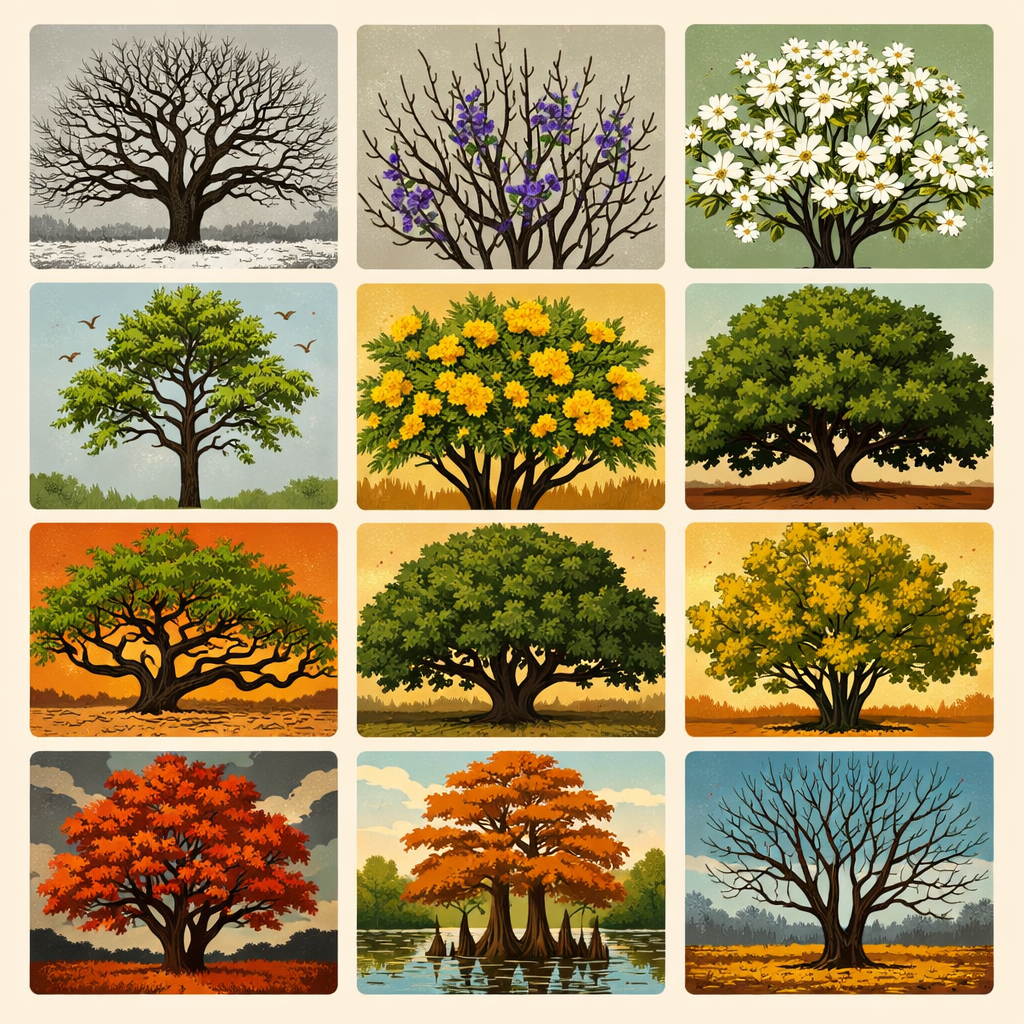
Texas summers are brutal. If you’re planting a tree, you want shade — and you want it fast. The good news is Texas has some of the fastest establishing native trees in the country. The bad news is the wrong fast grower in the wrong region will die just as fast as it grew.
This guide covers the best fast growing trees for every part of Texas so you plant smart from day one.
What “Fast Growing” Actually Means in Texas
Most fast growing trees gain 3–5 feet per year. But speed means nothing if the tree dies in year two. In Texas, three things determine how fast a tree actually grows:
∙ Planting time — October-planted trees grow 30–50% faster their first year than spring-planted trees
∙ Watering year one — deep, weekly watering in year one is non-negotiable for fast growth
∙ Region match — a fast grower in East Texas may barely survive in West Texas
💡 Quick Tip: Mulch 3–4 inches around the base of any new tree. It retains moisture, regulates soil temperature, and can double first-year growth compared to bare soil.
Fast Growing Trees by Region
🌿 Hill Country
Cedar Elm — 3–5 ft/year
The fastest native shade tree for the Hill Country. Handles limestone soil and clay equally well, turns golden yellow in fall, and tolerates drought better than almost any other fast grower. It’s also the only native Texas elm that blooms in fall — a fun fact that always surprises people.
Plant in September or October for best results. Spring-planted Cedar Elms need twice the water to hit the same growth rate.
Texas Ash — 3–4 ft/year
Often overlooked but one of the best fast growers for rocky Hill Country soils. Brilliant purple and yellow fall color that rivals anything you’d see up north.
🌲 East Texas
Loblolly Pine — 4–6 ft/year
The fastest large tree in Texas, period. Loblolly Pines have been recorded growing over 6 feet in a single year in ideal East Texas conditions. They need acidic, sandy, well-drained soil — don’t try to grow one west of the Piney Woods.
🌳 Tree Fact: Loblolly Pine is the most commercially important timber tree in the United States. In East Texas, they can reach 100 feet tall at maturity.
Shumard Red Oak — 3–5 ft/year
Best fall color of any fast-growing Texas tree — brilliant scarlet red in October. Grows well in both clay and sandy soils and handles urban conditions better than most oaks.
🌾 North Texas
Pecan — 3–5 ft/year
The Texas state tree grows fast AND gives you something back. Established Pecans tap deep groundwater and become surprisingly drought tolerant. Plant two different varieties within 50 feet of each other for cross-pollination and better nut production.
🌳 Tree Fact: A single mature Pecan tree can produce 50–200 pounds of nuts per year. They’re also one of the longest-lived trees in Texas — some specimens are over 1,000 years old.
Cedar Elm — 3–5 ft/year
Same great performance as in the Hill Country. Arguably the most adaptable fast-growing native tree in Texas — thrives in clay, limestone, and full urban conditions.
☀️ South Texas
Huisache — 3–4 ft/year
One of the most underrated fast growers in the state. Covers itself in brilliant golden pom-pom blooms every late winter before almost any other tree has leafed out. Incredibly fragrant — the blooms are used in perfume production in southern France.
Plant in March for best establishment. Huisache handles South Texas heat and drought like nothing else.
Anacua — 3–4 ft/year
Dense shade, white spring flowers that attract butterflies, and orange berries that bring in birds all summer. Completely under-used in South Texas landscaping.
🏜️ West Texas
Desert Willow — 3–4 ft/year
The best fast-growing flowering tree for dry climates in the entire country. Not actually a willow — it’s in the catalpa family — and it thrives on neglect once established. Produces pink and purple trumpet blooms from spring all the way through fall.
🌳 Tree Fact: Hummingbirds are so attracted to Desert Willow blooms that planting one is essentially putting up a hummingbird feeder that blooms for six months straight.
🌊 Gulf Coast
Live Oak — 2–3 ft/year
Slower than the others but the most valuable tree on this list long-term. Live Oaks build a canopy so strong and wide that a single mature tree can shade an entire yard. They’re also one of the most hurricane-resistant trees available — their low wide canopy deflects wind rather than catching it.
🌳 Tree Fact: The famous Treaty Oak in Austin — a Live Oak — is estimated to be over 500 years old. Some Gulf Coast Live Oaks have canopies wider than 100 feet.
3 Growing Tips That Actually Make a Difference
- Water deeply, not often
A 30-minute deep soak once a week builds deeper roots than daily shallow watering. Deeper roots mean more drought tolerance and faster long-term growth. - Skip the fertilizer in year one
New trees need to establish roots, not shoot up leaves. Heavy fertilizing in year one pushes top growth at the expense of root development — the exact opposite of what you want. - Timing matters more than anything
Fall-planted trees have the highest survival and growth rates in Texas. October is the single best month to plant. For the full month-by-month schedule, grab our latest — $4.99 and worth every penny.
Want to Go Deeper?
If you want the full breakdown of which trees belong in your specific region — water needs, sizing rules, pest problems, and planting tips for 22 native trees — Plant It Right: Texas Trees by Region has everything in one clean guide.
More Texas tree guides at BestTexasTrees.com
Tags: fast growing trees texas, best trees for texas yards, texas shade trees, native texas trees, texas landscaping tips, texas tree planting guide, drought tolerant trees texas, texas gardening
 Best Texas Trees
Leave a comment